If you’ve been scrolling beauty feeds lately, you’ve probably come across the term skin cycling. It’s one of those skincare routines that sounds simple but promises well-defined results: smoother texture, fewer breakouts, and a more resilient skin barrier. I decided to try a 10-minute version of skin cycling, committing to it every evening for 30 days, and here’s what happened—what worked, what didn’t, and whether I’d stick with it.
In this article the 10-Minute Skin Cycling Routine for 30 Days:
- What skin cycling is and why it’s trending
- The exact 10-minute routine I used (morning + evening)
- My day-by-day / week-by-week experience
- Before and after results (what I observed)
By the end, you’ll know if skin cycling is worth your time, how to adapt it for your skin type, and what to watch out for.

What is Skin Cycling?
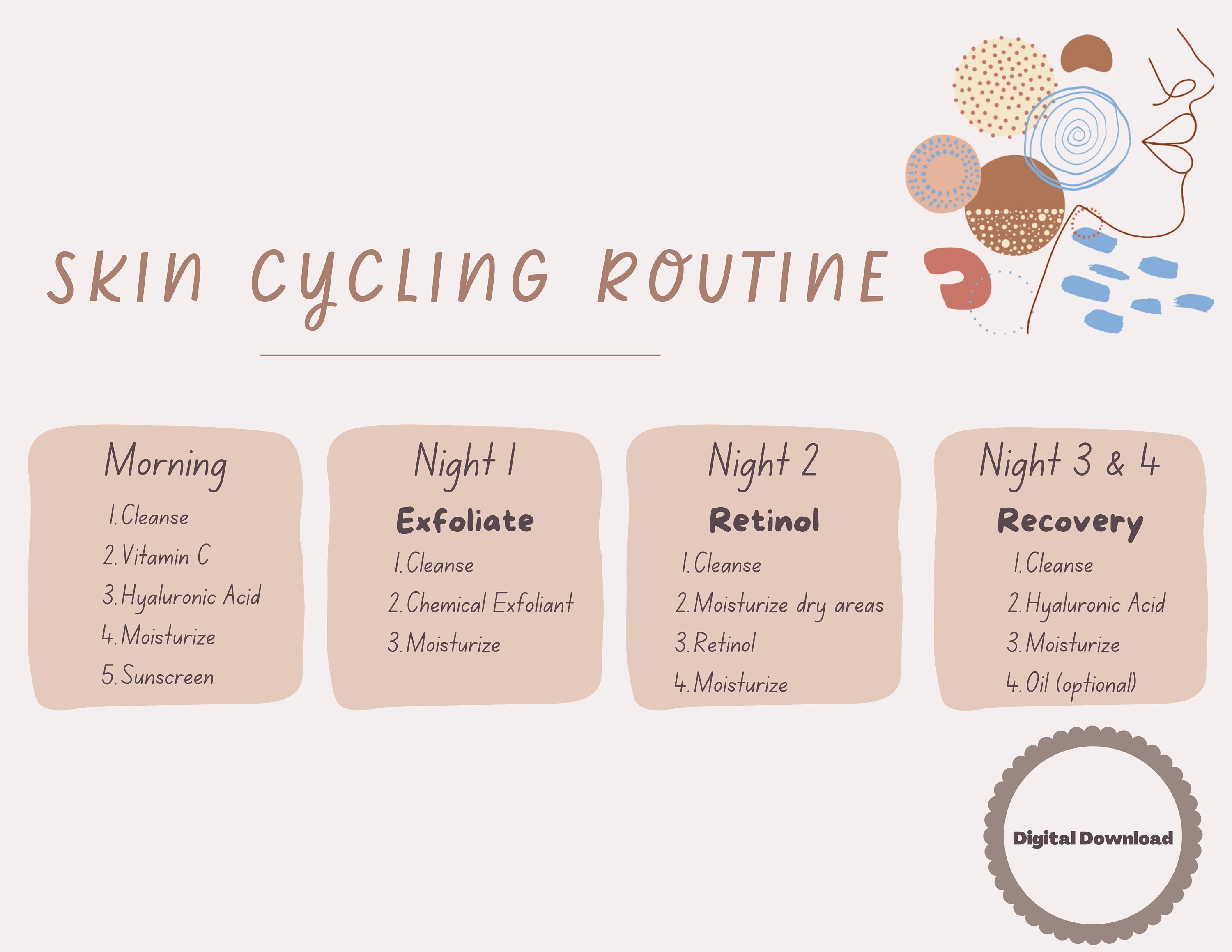
‘Skin cycling’ is a skincare method that intentionally rotates different active products and recovery nights in a cycle, rather than using everything every night. As described by dermatologists, the most common schedule is:
- Night 1: Exfoliation (acid or gentle peel)
- Night 2: Retinoid or vitamin A derivative
- Nights 3-4: Recovery / repair (hydration + barrier support)
The idea: you give your skin potent ingredients on certain nights and then allow it to “rest” and rebuild on the other nights. According to experts, this helps maximize benefits of active ingredients while minimizing irritation and barrier damage.
Why this makes sense: Many skincare routines overload the skin with many actives daily, increasing risk of stinging, flaking, redness, or just “plateauing” where nothing seems to change. Skin cycling simplifies and paces the process.
Why I picked a 10-minute version
My goal was to keep the time commitment realistic: only about 10 minutes each evening (and 5 minutes in the morning). Because I’m busy, I wanted something sustainable. I adapted the standard 4-night cycle and applied it for 30 days straight: roughly 7-8 cycles in a month. I also kept the morning routine consistent each day (cleanse + moisturizer + SPF) so nothing dramatic changed there.
My 10-Minute Skin Cycling Routine
Here’s the exact routine I followed. I did a patch test before starting just in case because I have combination skin with occasional breakouts and some early signs of texture.

Morning (every day, ~5 minutes)
- Gentle cleanser (my same usual one)
- Lightweight moisturizer
- Broad-spectrum SPF (morning is non-negotiable)
I kept the morning part consistent so any changes I saw would come mostly from the evening routine.
Evening (~10 minutes)
I followed this four-night repeat cycle:
- Night 1 – Exfoliation (10 minutes)
- Cleanse
- Apply a chemical exfoliant (AHA/BHA toner or serum)
- Moisturizer on top
- Night 2 – Retinoid (10 minutes)
- Cleanse
- Apply a pea-sized retinol or retinoid cream
- Moisturizer
- Night 3 – Recovery (10 minutes)
- Cleanse
- Hydrating serum or barrier-repair moisturizer
- Optional richer moisturizer
- Night 4 – Recovery (repeat) (10 minutes)
- Same as Night 3
Then repeat the cycle. Over the 30 days, I completed ~7 full cycles plus a partial one.
- Same as Night 3
I chose this pattern because it aligns with many expert-explained versions: exfoliation → retinoid → recovery → recovery. (OneSkin)
Why 10 minutes?
Because often skincare routines drag on with 10+ steps, expensive masks, etc. I wanted a minimal routine: one active night (exfoliate), one active night (retinoid), and two nights of care. Keeping each evening under 10 minutes increased the likelihood I’d stick to it.
Week-By-Week Experience & Observations
Here’s a breakdown of how my skin changed (or didn’t) over the 30 days.
Week 1 (Days 1-7)
- Night 1: I felt my skin slightly tingling with the exfoliant. Cleanser felt fine.
- Night 2: Retinoid caused very minor peeling around my cheeks and nose by morning. Nothing dramatic.
- Night 3-4: Recovery nights felt comfortable; no irritation.
- By the end of Week 1: Skin looked slightly brighter; texture felt a tiny smoother. I didn’t expect major changes yet.
Week 2 (Days 8-14)
- The second cycle: Exfoliation felt more comfortable (less tingling).
- Retinoid night: Peeling looked a little more visible morning of day 10 (fine flakes near nose).
- Recovery nights: I felt the moisturizer was more needed; I added a richer night cream.
- Observation: Pores around my T-zone seemed a bit less obvious; complexion looked more even.
Week 3 (Days 15-21)

- I started noticing I didn’t wake up with redness or stinging after exfoliation nights—which was good.
- Texture: The rough patches (around chin/jawline) visibly softened.
- Overall: Skin looked healthier (glossier but not oily). A few new breakouts showed up, but they resolved faster than usual.
- Confidence: I felt the routine was becoming sustainable; I wasn’t dreading nights.
Week 4 (Days 22-30)
- Final full cycle and extra partial night: the improvements seemed to plateau but were still stable.
- I checked “before” photos (Day 0) and compared with Day 30: I noticed fewer visible pores, less redness, and smoother skin.
- I no longer experienced peeling or flaking on retinoid nights (or very minimal).
- My skin barrier felt stronger: I could skip moisturizer one night and still feel okay the next morning (an indirect sign of improved barrier).
- Bonus: My morning makeup applied more smoothly (fewer dry patches, less patchy foundation application).
Results: What Changed & What Stayed the Same
✅ Improvements I Saw
- Texture: The “sandpaper” feel in places around my cheeks and nose significantly improved.
- Evenness: My skin tone looked more even; the “dullness” that I often see in the afternoon seemed reduced.
- Barrier resilience: I experienced less irritation, less stinging when switching weather or pillow cases, and fewer flares.
- Sustainability: I was able to stick to the routine; it didn’t feel overly burdensome.
⚠️ What didn’t change (much)
- Deep wrinkles: I still have the mild smile-line lines and forehead lines; 30 days is not enough for dramatic wrinkle remodeling.
- Hyperpigmentation: I have some sunspots/hyperpigmentation — they faded slightly, but not dramatically in 30 days.
- Breakouts: While fewer, I still had occasional breakouts (but they resolved quicker). For severe acne, a skin-cycling alone may not suffice.
📸 My Before & After Check
I took photos on Day 0 and Day 30 in the same lighting, same facial expression.
- Pores around the nose and cheeks looked smaller.
- Skin tone: Slightly brighter, with fewer red patches.
- The “foundation sits into dry patches” issue improved: fewer dry zones.
- Overall feel: My skin felt smoother to the touch.
Why This Routine Worked (or at least, why I believe it did)
Focused actives + recovery nights
By limiting the use of strong ingredients (exfoliant, retinoid) to specific nights, I reduced the risk of over-irritation. The recovery nights ensured the skin barrier had time to rebuild. This aligns with the expert explanations of skin cycling.
Consistency & simplicity
Rather than trying 10 new products every night, I stuck to fewer steps. This helped me be consistent and allowed my skin to respond. Trends in skincare show that more is not always better.
Morning routine kept stable
Because I didn’t change my morning routine (cleanser, moisturizer, SPF) much, I isolated changes to the evening cycle. This allowed me to attribute improvements more confidently to the skin cycling.
Barrier-focused recovery
The nights dedicated to hydration and barrier repair likely made a big difference. Many routines neglect the “repair” phase. By giving the skin a rest, I saw fewer side-effects and more sustainable results.
What I Learned & Adjustments I Would Make
Tailor recovery nights to your skin type
If you have dry or sensitive skin, you might need two or even three consecutive recovery nights instead of just one or two. Experts note that cycle length and rest frequency depend on your skin type.
Choose gentle actives if you’re new
If you’ve never used retinoids or chemical exfoliants, start slowly. A gentle AHA (eg 5-10 %) or a gentle retinol (low strength) helps. Patch test first.
Morning SPF + gentle cleanser = non-negotiable
Using powerful actives at night without morning sun protection is counterproductive. The routine only works if you protect your skin barrier during the day too.
Be patient: results grow over time
30 days gave me good visible improvement, but many changes (especially anti-aging) take 8-12 weeks or more. Chronological aging, deep lines or pigmentation may need extra time or complementary treatments.
Monitor skin reaction & avoid over-complication
If you experience persistent irritation, redness, or barrier damage, pause actives and focus on recovery for a week. Some dermatologists caution that trends (especially via social media) push too many actives.
Is Skin Cycling Right for You?

Yes, if you:
- Want a simplified but effective routine
- Have moderate concerns: texture, early signs of aging, occasional breakouts
- Are willing to commit for at least 30-60 days
Maybe not, or needs adjustment if you:
- Have very sensitive skin, eczema, rosacea or current skin barrier damage
- Are on prescription treatments that need daily use (some acne treatments must be used nightly)
- Expect dramatic transformation in a few weeks (manage expectations)
Always consult a board-certified dermatologist if you have a skin condition or are using prescription products.
My Final Verdict
After 30 days of following a 10-minute skin cycling routine, I’m impressed. My skin looks healthier, smoother, and more even. Best of all, I could sustain it without feeling overwhelmed. While this isn’t a magic “erase everything” solution, it’s a smart, realistic routine that works.
Would I continue? Yes—I plan to continue for another few months, maybe adjusting the cycle to include a second retinoid night once my skin is fully adapted. I’ll monitor and adjust recovery nights as needed.
For anyone looking to upgrade their skincare without going crazy, skin cycling is worth trying.
Conclusion
Trying a structured 10-minute skin cycling routine for 30 days taught me that less can be more when done smartly. By rotating actives with recovery nights, I saw meaningful improvements without overloading my skin. If you want smoother texture, clearer tone, and a routine you can maintain, skin cycling is a strong option. Just tailor it to your skin type, protect the barrier, and stick with consistency.